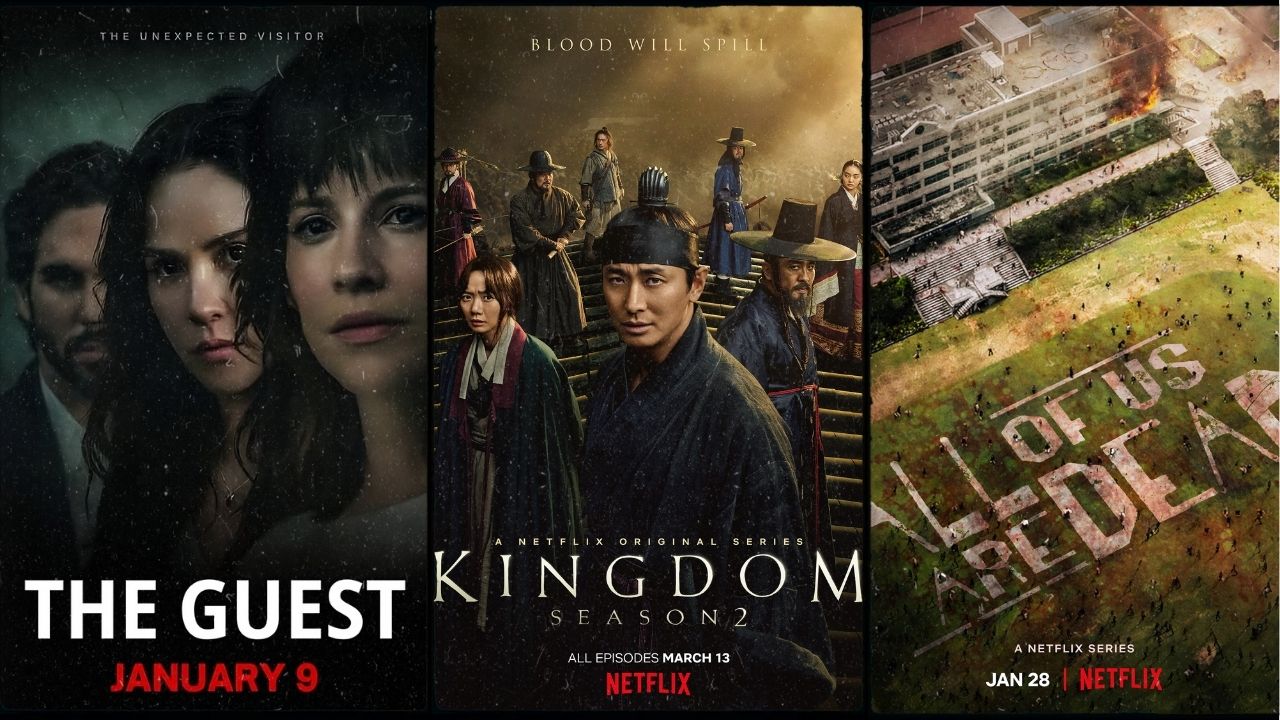
If you’re looking for the best K-Horror Series on Netflix Singapore 2026 has to offer, this list covers everything from supernatural exorcism dramas to zombie apocalypses that will keep you awake at night. Singapore streaming audiences now have access to some of Asia’s most terrifying horror productions, and the scariest Korean dramas on Netflix Singapore span multiple genres and styles. Whether you want pure supernatural horror, historical zombie devastation, high-school survival nightmares, or dark fantasy judgment tales, Korean creators have delivered masterpieces that rival Hollywood productions. Our carefully curated selection showcases the most disturbing K-horror available to stream right now, featuring titles that have broken viewership records and dominated global trending lists throughout 2025 and 2026.
1. The Guest: Pure Supernatural Terror
Streaming Status: Available on Netflix Singapore
The Guest stands as the scariest K-horror series you can watch right now. This 2018 OCN production redefined exorcism horror through a uniquely Korean lens that blends shamanism with Catholic tradition. The series earned a peak rating of 4% nationwide despite not airing during prime time—a remarkable achievement reflecting its intense psychological impact on viewers.
The story begins twenty years before the main narrative. A powerful supernatural spirit named Park Il-do possesses and brutally kills members of a young shaman family, leaving only scattered survivors who don’t remember the traumatic events. Fast forward to present day: Yoon Hwa-pyung works as a taxi driver, seemingly ordinary on the surface. However, he possesses extraordinary psychic abilities allowing him to see through the eyes of possessed individuals.
When cases of possession suddenly escalate, three unlikely protagonists converge without recognizing their shared tragic history. Yoon Hwa-pyung uses his visions to track possessed victims. Priest Choi Yoon, cynical and cold despite his calling, performs brutal exorcisms. Detective Kang Gil-young, tough and no-nonsense, investigates the crimes following each possession and murder.
The brilliance lies in the slow revelation that all three grew up in the same traumatic incident twenty years prior. Each experienced different aspects of Park Il-do’s possession rampage—as a shaman child, as a priest-in-training, as a police detective’s relative—yet none recognize the connections. The series layers mystery, horror, and emotional revelation simultaneously.
The exorcism sequences themselves deliver genuine terror. Practical special effects showcase the grotesque manifestations of possession: bodies contorting in impossible ways, demonic voices breaking through victims’ throats, psychological manipulation that pushes possessed individuals toward murdering loved ones. The cinematography emphasizes darkness and claustrophobic spaces where possession unfolds.
Critics and audiences responded with enthusiasm. It’s worth noting that film scholars and horror enthusiasts consistently compared The Guest to The Exorcist, describing the series as “a modern horror classic” and calling Episode 1 “arguably the most perfect pilot episode in K-drama history.” The tension builds relentlessly across the season, reaching a climactic confrontation that answers the mystery of Park Il-do’s origin and powers.
| The Guest Details | Information |
|---|---|
| Broadcast Year | 2018 |
| Episodes | 16 |
| Network | OCN → Netflix |
| Director | Various |
| Main Cast | Kim Dong-wook, Kim Jae-wook, Jung Eun-chae |
| Runtime | ~60 minutes per episode |
| Rating | Peak 4% (Despite Non-Prime Slot) |
2. Kingdom: Historical Zombie Horror at Its Finest
Streaming Status: Available on Netflix Singapore (Both Seasons + Special)
Kingdom merges two seemingly incompatible genres into something genuinely innovative: zombie horror meets Joseon Dynasty historical drama. Created by Kim Eun-hee and directed by Kim Seong-hun, the series redefined zombie fiction when it premiered on Netflix in 2019. Unlike American zombie narratives featuring modern urban landscapes and firearms, Kingdom grounds its undead apocalypse in authentic 1601 Korea with swords, arrows, and tactical ingenuity.
The plague begins mysteriously when the King falls gravely ill. The Queen and her political allies immediately ban all visitors, sparking Crown Prince Lee Chang’s suspicion. His investigation uncovers something far worse than ordinary illness: the dead are returning to life, hungry and relentless. A forbidden resurrection plant—used in misguided effort to “cure” the king—transformed corpses into aggressive undead creatures.
Lee Chang discovers the outbreak has already spread beyond the palace. An entire region called Dongnae faces devastation as the plague consumes the population. The prince must simultaneously navigate court treachery, combat the undead threat, and convince frightened soldiers to fight creatures that seem impossible to kill.
The production quality showcases Netflix’s investment in Korean content. Authentic Joseon-era palace interiors were reconstructed specifically for filming. Costumes achieve historical accuracy from nobility’s silk robes to peasants’ practical garments. Makeup effects blend traditional techniques with modern artistry, creating zombie aesthetics distinctly different from Western zombie media.
The zombie combat reflects historical reality. Characters wield Joseon-era swordplay—quick, precise strikes rather than exaggerated flourishes. Fighters must outthink their undead opponents, recognizing that traditional strength means nothing against creatures that won’t tire or feel pain. Claustrophobic scenes in narrow palace corridors and dense forests amplify the tension beyond simple action sequences.
Season 1 introduces the outbreak and its origins. Season 2 expands the crisis, deepening political conspiracies and introducing new threats. A special episode called Kingdom: Ashin of the North explores the plague’s backstory through Ashin, a pivotal character portrayed by Gianna Jun.
Critics universally praised Kingdom’s fusion of genres. It’s worth noting that multiple film scholars gave the series 9-10/10 ratings, calling it “one of the best zombie shows ever made” and “a South Korean masterpiece with nothing to envy to big Hollywood productions.” The slow pacing in the middle episodes builds toward a “heart-racing finale” that justifies the journey.
Beyond its horror elements, Kingdom operates as sharp social commentary. The plague becomes a metaphor for corruption spreading through the kingdom. Hierarchical class structures—the disease that truly consumes the nation—become visible through zombie outbreak consequences. Nobles hoard supplies while peasants starve. Military leaders prioritize power over people. The series asks whether humans represent greater danger than undead threats.
3. All of Us Are Dead: Survival Horror Through a Teen Lens
Streaming Status: Available on Netflix Singapore (Season 1 Complete | Season 2 Coming October 2026)
All of Us Are Dead combines coming-of-age drama with genuine zombie apocalypse horror in ways that amplify both genres. When the series premiered January 28, 2022, it immediately captured global audiences: the show accumulated 474.26 million hours of viewing in its first 30 days alone—an achievement reflecting its massive appeal across cultures and age groups.
Hyosan High School serves as ground zero when a deadly virus outbreak occurs during regular school hours. Students including Nam On-jo, Lee Cheong-san, and others find themselves trapped inside classrooms and corridors as infected classmates transform into rabid creatures. Authorities respond by surrounding the building with military forces and imposing martial law, turning the school into a prison where escape becomes impossible.
The genius of this series lies in how it respects both the horror genre and the coming-of-age narrative simultaneously. Rather than treating teen characters as cannon fodder, the show examines how ordinary adolescents navigate impossible moral choices. Friendship dynamics that seemed trivial yesterday—popularity hierarchies, romantic tensions, school cliques—take on life-or-death significance when classmates become threats.
Director Lee Jae Gyoo invested heavily in production authenticity. The production team constructed a four-storey high school set specifically for filming, allowing realistic spatial storytelling throughout the 12-episode season. Makeup effects, zombie choreography, and practical blood work consistently receive praise for technical excellence. Each zombie death carries narrative weight because viewers understand the victim’s personal story.
The series brilliantly avoids the “split up and get killed separately” cliché by making isolation the characters’ deliberate tactical choice. When they separate, the viewer understands the reasoning—survival calculations often require abandoning friends. This moral complexity distinguishes All of Us Are Dead from standard zombie fare.
Season 2 Update: Production officially began in 2025, with script reading confirmed by Netflix as of July 2025. The original cast returns, including Park Ji-hu, Yoon Chan-young, and Lomon. Director Lee Jae Gyoo stated: “Season 2 will feature more powerful and evolved zombies, and the story will unfold in the fallen Seoul. We plan to meet you with a more fun and spectacular drama.”
The season 2 plot expands dramatically. Nam On-jo, now a college student processing trauma from the first outbreak, encounters a new virus outbreak spreading throughout Seoul itself. Rather than containing the threat within school walls, Season 2 unleashes zombies across the entire city, raising stakes exponentially. Filming commenced in August 2025, with Netflix targeting an October 2026 release—though industry sources indicate 70-80% confidence in this timeline.
The series appeals to K-drama enthusiasts and horror fans equally. Romantic subplots carry genuine emotion without overshadowing survival stakes. Character deaths matter because relationships were established beforehand. Some viewers describe the emotional impact as comparable to The Summer I Turned Pretty, but with actual existential threats rather than romantic complications.
| All of Us Are Dead Timeline | Status |
|---|---|
| Season 1 Premiere | January 28, 2022 |
| Season 1 Episodes | 12 |
| Viewership (30 days) | 474.26 million hours |
| Season 2 Status | In Production (July 2025+) |
| Expected Season 2 Release | October 2026 |
| Returning Cast | Confirmed (Park Ji-hu, Yoon Chan-young, Lomon) |
| New Location | Seoul City (Expanded from School) |
4. Gyeongseong Creature: Historical Horror with Creature Terror
Streaming Status: Available on Netflix Singapore (Both Seasons Available)
Gyeongseong Creature takes historical horror to new depths by grounding supernatural elements in real war crimes. The series structure spans eighty years, moving between 1945 Gyeongseong (Japanese-occupied Seoul) and 2024 contemporary Seoul. This temporal range allows viewers to witness both the creature’s creation and its modern consequences.
The narrative centers on two protagonists unaware of deeper connections. Park Seo-joon plays a wealthy pawnshop owner with mysterious dark motivations, appearing in both 1945 and 2024 segments through complex narrative framing. Han So-hee portrays a determined missing person finder. When they align to investigate a monster emerging from underground depths, they uncover evidence of secret biological experiments conducted in Ongseong Hospital.
The creature itself becomes a metaphor for colonization and dehumanization. The series explicitly connects to Unit 731—the real Imperial Japanese Army unit that conducted horrifying biological experiments on civilian prisoners during World War II. Rather than treating this history as backdrop, Gyeongseong Creature transforms historical atrocity into supernatural terror.
Season 1 gradually builds atmospheric dread as the creature stalks victims through dark corridors and underground passages. The design emphasizes something wrong at fundamental biological level—a being created through human experimentation rather than natural evolution. Scenes showing the creature’s first encounters become genuinely disturbing because audiences understand the human suffering that created this monster.
Season 2 expanded the narrative into 2024, introducing Nam On-jo who now attends university in Seoul. A new virus outbreak mirrors the original creature threat, suggesting history repeats or the original infection never truly ended. The production maintains atmospheric excellence while deepening the historical commentary.
Directors Jung Dong-yoon, Roh Young-sub, and Jo Yeong-min crafted something rivaling international productions in terms of cinematography and practical effects. The historical sets demonstrate meticulous attention: 1945 Gyeongseong feels authentically occupied, while 2024 Seoul carries modern familiarity. This authenticity grounds the supernatural elements—viewers believe these horrors could genuinely occur in these real locations.
The series particularly resonates with Singapore audiences familiar with colonization histories. Gyeongseong Creature proves horror can explore historical trauma without becoming exploitative documentary. Instead, it channels human grief and violation into creature mythology, creating something that terrifies while educating.
5. Hellbound: Dark Fantasy Divine Judgment Horror
Streaming Status: Available on Netflix Singapore (Both Seasons Available)
Hellbound arrived on November 19, 2021, and immediately dominated global streaming. Within hours of release, it became Netflix’s most-watched series worldwide, surpassing even Squid Game in viewership. Created and directed by Yeon Sang-ho, the series applies his expertise from Train to Busan and Psychokinesis to supernatural horror exploring religion, morality, and mob psychology.
The premise alone terrifies: otherworldly beings called “angels” suddenly materialize without warning to deliver decrees condemning specific individuals to Hell. The condemnation is absolute—there’s no appeal, no escape, no negotiation. The condemned receive exact time of execution: seconds away or years in future. When the decreed moment arrives, three monstrous “demons” appear to brutally execute the judgment in public, incinerating the body in spectacular fashion.
The execution spectacle becomes religiously significant. Jung Jinsu, the ambitious founder of the New Truth Society, convinces the public these demonic executions represent God’s work. His religious movement grows exponentially, exploiting the collective fear gripping the nation. A secondary organization called Arrowhead—radical followers of the New Truth—violently punishes anyone questioning the religious interpretation.
Lawyer Min Hye-jin opposes the religious mob mentality, attempting to uncover truth about New Truth’s genuine nature and culpability in the supernatural events. Detective Jin Kyung-hoon’s daughter becomes entangled with the cult, forcing him to navigate between duty to law and protection of family. These personal stakes amplify the supernatural horror—the demons matter less than the human corruption they inspire.
Yeon Sang-ho’s directorial approach emphasizes psychological horror over jump scares. The dread comes from watching rational people surrender to irrational religious fervor. Citizens participate in group violence, justifying it as divine justice. The series asks uncomfortable questions: if something is truly divine judgment, does resistance become blasphemy? Can organized religion maintain integrity when apocalyptic supernatural events validate its claims?
Season 1 established the premise and its consequences across six episodes. Season 2, released October 25, 2024, continues the narrative a few years later, deepening examination of religion’s role in Korean society and media’s influence on mass belief. The second season introduces additional complexity without abandoning the core horror premise.
The series achieved remarkable festival recognition. It premiered at Toronto International Film Festival in September 2021 within the Primetime TV series program—the first Korean drama to participate in the festival’s main television competition. Season 2 received invitation to Busan International Film Festival’s On Screen section, indicating sustained critical prestige.
| Hellbound Achievements | Details |
|---|---|
| Release Date | November 19, 2021 (Season 1) |
| Global Impact | Most-watched Netflix series (surpassed Squid Game) |
| Season 1 Episodes | 6 |
| Season 2 Release | October 25, 2024 |
| Season 2 Episodes | 6 |
| Festival Premieres | Toronto IFF (2021), Busan IFF (2024) |
| Creator/Director | Yeon Sang-ho |
| Production Company | Netflix Original |
Why These 5 Series Matter in 2026
Korean horror has evolved from niche foreign content into globally competitive entertainment. These five series prove that K-horror doesn’t simply import American zombie or haunted-house templates. Instead, Korean creators infuse supernatural concepts with distinctly Korean cultural elements: shamanism, historical trauma, Confucian social hierarchies, and collective religious psychology.
Singapore audiences specifically connect with these narratives because Korean and Southeast Asian cultures share understanding of spiritual possession, colonial histories, and cyclical social patterns. Where American horror often emphasizes individual survival against external threats, K-horror frequently explores how communities enable moral collapse through collective choices.
All five series also showcase Netflix’s investment in Korean content production. The budget allocations permit authentic historical recreation, practical effects excellence, and cinematographic sophistication. These aren’t low-budget productions—they rival major theatrical film budgets while maintaining serialized storytelling depth.
The Rankings
#1: The Guest – Pure supernatural horror delivered through exorcism narrative. No zombie distractions, no historical tangents—just psychological terror and demonic possession.
#2: Kingdom – Proves zombie genre can feel completely fresh through historical setting and class-commentary themes. Political intrigue equals horror tension.
#3: All of Us Are Dead – Character-driven zombie horror that respects teenage agency. Emotional investment amplifies terror when beloved characters face danger.
#4: Gyeongseong Creature – Historical atrocity transformed into creature horror. Unique dual timeline structure and colonization commentary.
#5: Hellbound – Dark fantasy horror exploring how human evil exceeds supernatural threats. Psychological manipulation versus demonic judgment.
Each series delivers different horror experiences while maintaining exceptional production quality and storytelling depth. Start with The Guest for immediate scares, or begin with Kingdom if you prefer worldbuilding and political complexity alongside horror. Either way, these five series represent the scariest K-horror currently available on Netflix Singapore for 2026 viewing.